 Many Card Games
Tute rules
Spanish trick-taking where four kings or four horses end it outright.
- 2-4 players
- Cards removed
A Spanish trick-taking game built on marriages, and the game most Spanish children learn first. Two to four players. A trump is turned up under the stock, and points come from aces, threes and the court cards. A king and horse of the same suit make a cante worth 20, or 40 in trump. Once the stock is gone the play turns strict, and whoever holds all four kings or all four horses wins the hand outright.
The deck
40 cards, Spanish suited — ace, three, king, horse, jack, then seven down to two. Eight cards each at two players.
The ranking
Ace, three, king, horse, jack, seven, six, five, four, two.
Card values
Ace 11, three 10, king 4, horse 3, jack 2, everything else nothing. 120 points, plus 10 for the last trick.
The trump
One card is turned face up under the remaining stock; its suit is trump. Holding the seven of trump, you may swap it for that card when it is your turn to lead.
The first phase
Play any card you like. Highest trump wins, otherwise the highest card of the suit led. Winner draws first, then the loser, so hands stay at eight.
Cantes
King and horse of the same suit, declared after you win a trick and before you lead the next: 20, or 40 in trump.
The second phase
Once the stock is gone you must follow suit, must beat the highest card if you can, and must trump when you cannot follow.
Tute
Holding all four kings, or all four horses, and declaring it wins the hand outright, whatever the score. This is where the game gets its name, and it is why you hold onto kings that look useless.
Whoever has more than half the points wins the deal.
Tute: an example game
One game of Tute followed from the deal to the finish, move by move, with the reason for each choice.
The deal
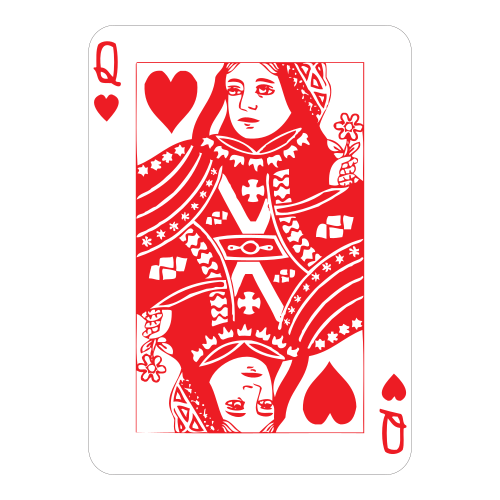
You against Ada. Ada deals eight each and turns up the A♣, so clubs are trump. The queen plays as the horse here.
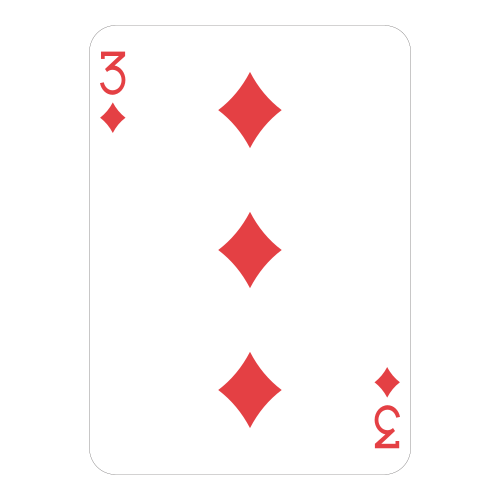
You hold 7♣, K♣, K♥, Q♥, 3♦, J♦, 5♠ and 2♥. The player to the dealer's left leads, and that is you.
Swapping the seven
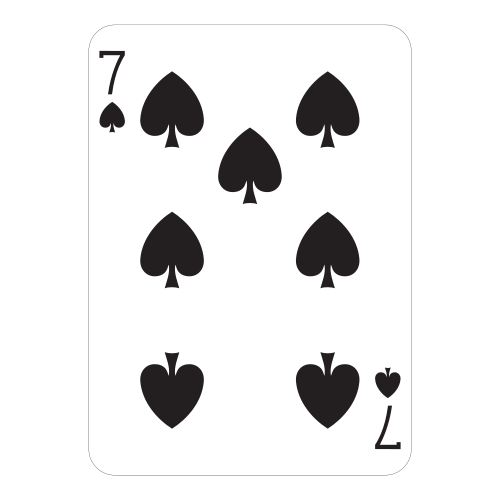
The turned card is the ace of trumps, worth eleven, and you hold the seven of trumps. On your lead you swap them: the A♣ comes into your hand, and the 7♣ lies under the stock, the last card anybody will draw.
You cannot declare your hearts yet — you have not won a trick. You lead 2♥, worth nothing. Ada keeps her good cards and throws 4♠, and your two of hearts takes the trick.
Las cuarenta
You draw first, and it is the Q♣. Now you hold king and horse of trumps, and you have won a trick. On your lead you declare them: forty points, las cuarenta. Ada now knows two of your cards.
You lead 5♠, and Ada takes it with 6♠. On her lead she declares king and horse of diamonds, for twenty.
Twenty more
A few tricks later Ada leads J♦, and you take it with 3♦ — twelve points, and the lead. You declare king and horse of hearts for twenty.
You have declared sixty points without playing a single one of those four cards. They are still in your hand.
The strict half
The stock runs out, and the rules change. Ada leads A♥. You must follow suit, and you must beat it if you can — you cannot, so you play your cheapest heart, the Q♥, rather than the K♥.
Your A♣ is the top trump, and you keep it for the end. It takes the last trick, and the ten points that come with it.
The count
In tricks you have 68 points to Ada's 62, the 130 of the deal. With your cantes you have 128; Ada has 82 with her twenty. The deal is yours.
One deal to nothing, in a match to five. Almost half your points came from cantes — from cards you only had to show.
Found a mistake, or something unclear, in these rules? Tell us