 Many Card Games
Spoons rules
Pass cards until someone has four alike, then grab before the spoons run out.
- 3-8 players
- Standard deck
A game of passing cards and physical scrambling, and one of the few card games where the cards are almost incidental.
What you need
A 52-card deck, and spoons — one fewer than the number of players. Put them in a circle in the middle of the table within everyone's reach.
The deal
Four cards to each player from a full 52-card deck. The dealer keeps what is left face down beside them, and that is the stock they draw from.
A quicker pack
Some tables use only four cards of one rank per player — with five players, the aces, kings, queens, jacks and tens. That deals every card out and leaves no stock, so the cards go round a closed circle instead of down a line and every hand is one card from four of a kind. It is the faster game and worth knowing, but it is not the one described below.
The play
There are no turns. Everyone plays continuously.
The dealer draws from the remaining stock, keeps or rejects a card, and passes one face down to the player on their left. Every player does the same: take the card passed to you, keep it or pass it on, and always end up holding four cards.
Cards accumulate in a discard pile beside the last player in the circle.
Grabbing
As soon as you hold four of a kind, take a spoon from the middle. You may do it openly or sneakily.
The moment anyone takes a spoon, everyone else may take one too. One player will be left without.
Losing
The player without a spoon takes a letter — S, then P, then O — and spells out SPOONS over successive rounds. Spell the whole word and you are out.
Remove one spoon each time a player is eliminated. The last player left wins.
Half the game is watching for someone quietly sliding a spoon off the table without saying anything.
Spoons: an example game
One game of Spoons followed from the deal to the finish, move by move, with the reason for each choice.
The deal
Four players — Cleo, you, Ada and Bo — and three spoons in the middle. Cleo deals, so the line runs from her to you, to Ada, to Bo, and Bo throws onto the discard pile.
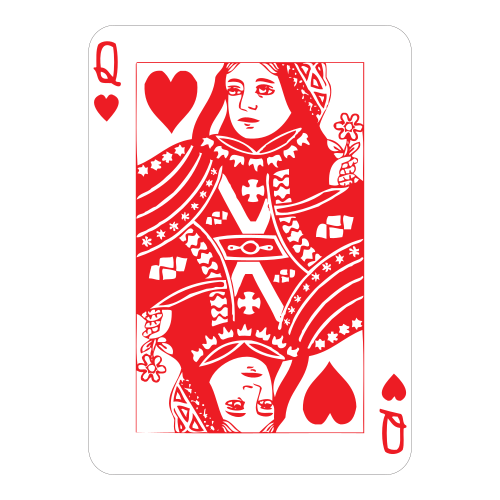
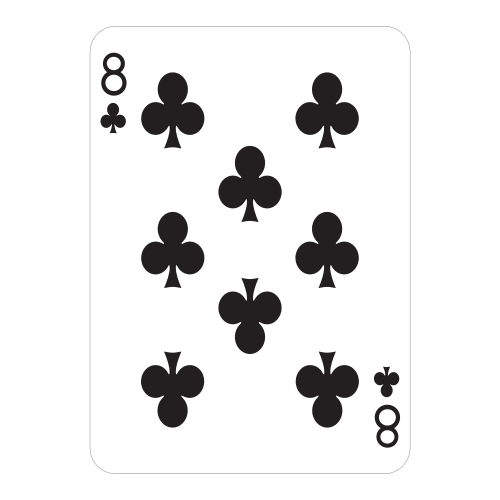
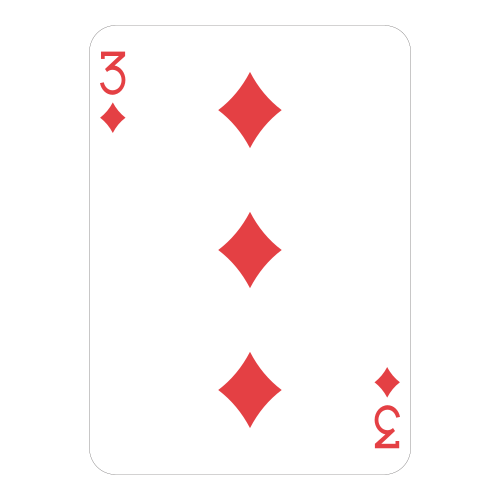
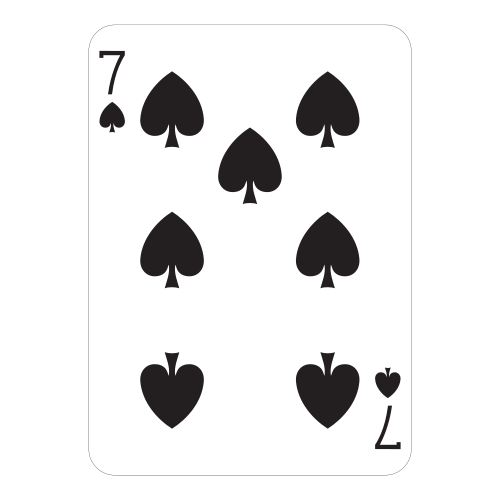
You are dealt 7♣, 7♥, K♠ and 2♦. A pair of sevens: that is what you collect.
The first passes
Cleo draws and passes you 9♠. It is no use, so it goes straight on to Ada. The next card is 7♦: you keep it and pass the 2♦. You hold three sevens and the K♠.
Then K♦ arrives. Two kings would be tempting, but you have three sevens, so the K♦ goes on and so, a moment later, does the K♠ when another card comes.
Four of a kind
A few cards later Cleo passes you 7♠. Four sevens. You press "Take a spoon!" at once, and the count in the middle drops from three to two.
There is no hiding it on screen: the moment the count changes, the button lights up for everybody.
The scramble
Ada sees the count drop and takes one: one left. Cleo is drawing a card and takes the last one a moment later. Bo was looking at his hand, wondering whether to keep a queen, and is left without.
Bo takes an S. He presses the button a second later anyway and the table tells him he was a moment late; it costs nothing more.
The next rounds
The deal passes to you, so you draw now. Bo watches the counter instead of his cards and is never last again — but Ada is, twice, and takes S and P.
In a game to three letters, the next time Ada is left without she spells S-P-O and is out. Then two spoons go in the middle for the three of you who are left.
What the round shows
You won the round because you chose sevens early and passed everything else at once. Bo lost it without ever being close to four of a kind: he was simply the last to see the spoons go.
That is the whole game. Collecting matters, but watching the middle matters more.
Found a mistake, or something unclear, in these rules? Tell us