 Many Card Games
Briscola rules
Italy's simplest classic: forty cards, one trump, no need to follow suit.
- 2-6 players
- Cards removed
The card game of Italy, and about as easy to learn as a good game gets. Two, four or six players, and there is no obligation to follow suit at all.
The deck
40 cards — the 52-card deck with eights, nines and tens removed, or an Italian pack. Three cards each.
The ranking
Ace, three, king, queen, jack, seven, six, five, four, two. The three sitting second is the first thing to learn.
Card values
Ace 11, three 10, king 4, queen 3, jack 2, everything else nothing. 120 points in the deck, and 61 wins.
The trump
After dealing, one card is turned face up and placed half under the remaining deck. Its suit is the briscola — trump for the whole hand — and that card is the last one anybody draws.
The play
The player to the dealer's right leads. You may play absolutely any card. The trick goes to the highest trump, or if none was played, the highest card of the suit led. A card of another suit entirely simply cannot win.
After each trick, the winner draws first from the deck and the others follow, so everyone keeps three cards until it runs out.
Briscola chiamata
The five-player version, and the one worth graduating to. Before play, a player bids to name a card; whoever holds it is their secret partner, and nobody knows until it appears.
In partnership play at four, signalling to your partner with agreed facial gestures is not cheating — it is part of the game, and the opponents are watching for it.
Briscola: an example game
One game of Briscola followed from the deal to the finish, move by move, with the reason for each choice.
The deal
Two players, you and Ada, playing first to two deals. Ada deals three each and turns up the 5♠, so spades are trump; the 5♠ lies under the stock and will be the last card drawn.
You hold A♥, 4♠ and Q♣. Ada holds 3♥, K♦ and 7♣. The player to the dealer's right leads, and with two players that is you.
Leading something cheap
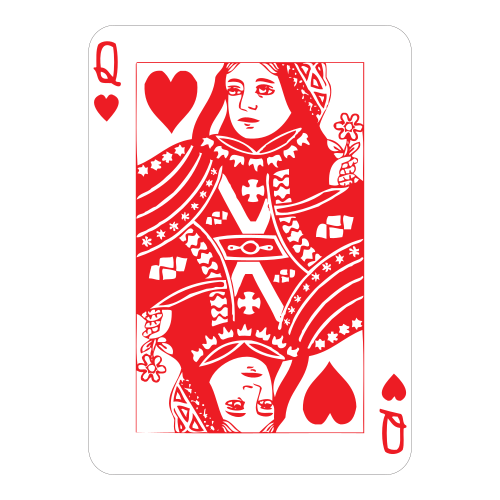
The A♥ is eleven points, and leading it would hand it to any trump Ada holds. You lead Q♣, worth three. Ada cannot beat it in clubs and has no trump, so she throws 7♣, worth nothing. Three points to you.
You draw first, as the winner: 3♠. Ada draws J♥. You lead again with 4♠ — a trump, but worth nothing. Ada has no trump to beat it and throws her cheapest card, J♥. Two more points.
A three into an ace
You draw 6♦ and Ada A♠. You lead 6♦; Ada takes it with K♦ for four points, and as the winner she draws first: 2♣ for her, 7♥ for you.
Ada now leads 3♥, hoping the ace of hearts is still in the stock. It is in your hand. You take her three with A♥: twenty-one points in one trick. The score is 26 to 4.
The ace of trumps
You are holding 3♠, the second-best trump, and the A♠ has not shown. Halfway through the deal you lead the 3♠ to draw out Ada's trumps, and she takes it with the A♠ — twenty-one points to her, and the most expensive trick of the deal.
The lesson is the same one Ada learned with the three of hearts: a three is only safe once its ace has gone.
The last card
Ada wins the trick before the stock runs out, so she draws the last face-down card and you take the 5♠ that has been showing all game. Three tricks are left and nothing to draw.
Every other card has now been played or is in your hand, so you know Ada's three. You win two of the last three tricks with the 5♠ and your king of clubs.
The count
You end with 68 points to Ada's 52. Sixty-one takes the deal, so it is yours: one deal to nothing.
The two biggest tricks were an ace taking a three, once each way. Whoever wins the next deal decides whether this game needs a third.
Found a mistake, or something unclear, in these rules? Tell us