 Many Card Games
Mus rules
Basque bluffing in pairs, with signals across the table.
- 4 players
- Cards removed
The Basque card game, played in pairs across northern Spain, and the only widely played game where signalling to your partner is not merely allowed but essential. Four players, and it is loud.
The deck
40 cards, Spanish suited. Four cards each. Threes count as kings and twos count as aces, so there are eight of each.
The mus
Before anything is bet, players go round asking for mus. If all four agree, everyone discards as many cards as they like and draws replacements. This repeats until someone cuts it off, and only then does the betting start.
The four rounds
Each is bet on separately, in this order:
Grande — the highest hand, compared card by card from the top. Chica — the lowest hand, compared the same way from the bottom. Pares — pairs. You announce whether you have any, then bet, then compare: four of a kind beats a full house beats a single pair. Juego — whether your four cards total 31 or more, counting court cards as 10 and the rest at face value. 31 is the best total, then 32, then 40 downward. If nobody has 31 or more, the round is played as punto instead, for whoever is closest to 30.
Betting
Bets are made in stones (piedras). Either side may raise, and a side that declines a bet concedes that round for the amount on the table before the raise.
The signals
Partners signal their holdings with agreed facial gestures — a bitten lip for the best pair, raised eyebrows for the two aces, and so on. The opposing pair is watching for them, and being caught is part of the game.
Game is 40 stones, usually best of three.
Mus: an example game
One game of Mus followed from the deal to the finish, move by move, with the reason for each choice.
The deal
Four players: you and Bo are partners against Ada and Cleo, sitting you, Ada, Bo, Cleo. Cleo deals, so you are the mano: you speak first and win ties.
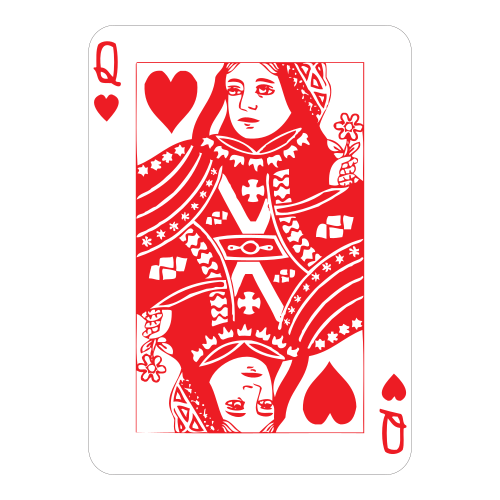
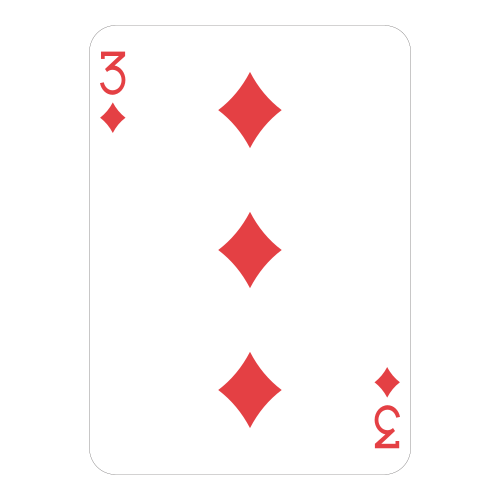
Your four cards: K♠, 3♥, A♦ and 5♣. The three counts as a king, so you hold two kings — a pair — an ace and a five.
No mus
A pair of kings is worth keeping, so you say no mus straight away. Nobody changes cards, and the betting begins.
The others hold: Ada K♥ Q♦ J♣ 4♠; Bo K♣ J♥ Q♠ A♥; Cleo 7♣ 7♦ 7♥ 6♠. Nobody sees anybody else's.
Grande and chica
Grande: two kings on top is a good hand, and you bet two stones. Ada, holding one king and a horse, walks away. Your side takes one stone, what was on the table before the bet.
Chica: everybody passes. The round is still worth a stone, decided when the hands are shown.
Pares and juego
Pares: only you and Cleo have pairs. You pass, Cleo bets two, and you accept with your kings. Juego: you have 26 and Cleo 27, so only Ada and Bo have juego. Ada passes, Bo bets two, and Ada accepts with her 34.
All four rounds are bet. The hands are turned over.
The showdown
Chica: you and Bo both start with an ace, but your second card is a 5 and Bo's a jack, so your hand is the lowest: one stone to your side. Pares: Cleo's three sevens, medias, beat your pair: two stones to her side. Juego: Bo's king, jack, queen and ace make 31, the best juego there is, and beat Ada's 34: two stones to you and Bo.
The hand ends 4–2 to you and Bo: one for grande, one for chica, two for juego.
What the hand shows
Your pair of kings won grande without a showdown and lost pares to medias. Bo's 31 won juego, and you never knew he had it until the cards were shown — at a real table, a signal would have told you.
The game goes to 40, so it is a long evening. The next hand is dealt a few seconds later, with Ada as the mano.
Found a mistake, or something unclear, in these rules? Tell us